Author Media Kit: Professional Templates for Visibility
In the publishing world, perception is currency. Before a journalist agrees to an interview or a bookstore owner decides to stock your title, they need a quick, professional snapshot of who you are. That is the specific problem this 7-page Author Media Kit solves. It is not just a collection of random pages; it is a structured system designed to turn a casual inquiry into a concrete opportunity. We have all heard the adage that you never get a second chance to make a first impression. In the context of media outreach, this template ensures your first impression is not just good, but credible and organized.
Visual Identity and Design Aesthetics
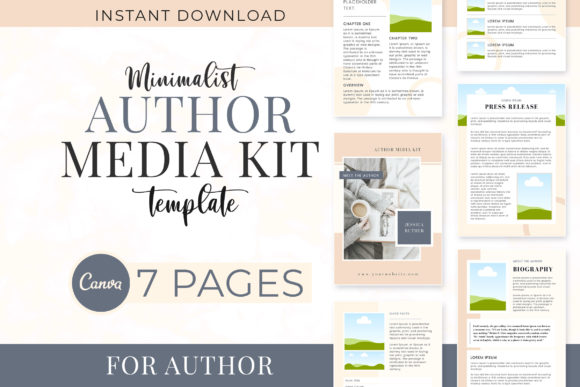
The visual personality of this kit is best described as "elegant utility." It avoids the cluttered look of traditional press kits while steering clear of overly artistic layouts that sacrifice readability. The design relies on a clean A4 canvas, utilizing ample white space to let your content breathe. This approach is vital for modern editorial design, where the reader’s eye needs a clear path to follow.
From a brand identity perspective, the template acts as a neutral but sophisticated vessel. It uses a balanced hierarchy of typography—likely pairing a strong serif font for headings to convey authority with a clean sans serif font for body text to ensure legibility. This combination is a staple in high-end publishing and logo design because it bridges the gap between tradition and modernity. The color palette is intentionally restrained, allowing you to customize the text and background to match your book’s specific brand identity without clashing with the structural elements.
Strategic Content Architecture
A beautiful document is useless if the information is hard to find. This Author Media Kit template is built on a seven-page structure that mirrors the decision-making process of an influencer or journalist. It moves logically from the broad picture to the specific details.
- The Cover Page: This is your billboard. It focuses on high-impact visuals—what the prompt calls "aesthetic shots"—to establish the mood immediately.
- About the Book & Most Popular Topic: These sections provide the "hook." Journalists are looking for a story, not just a summary. This section helps you articulate why your book matters right now.
- Author Bio & Quick Facts: Here, you build the human connection. This is where your headshot and a condensed version of your expertise live. It answers the question: "Why are you the right person to talk about this?"
- Press Release & Reviews: Trust signals are everything. By including a pre-written press release and curated reviews, you reduce the workload for the media professional, making it easier for them to say "yes" to covering you.
This layout functions as a roadmap. Whether you are sending this to a podcast host or a literary agent, the consistency of the pages ensures they find the data they need without digging through email threads.
Practical Application for Creators and Brands
While the primary audience is authors, the utility of this Author Media Kit extends to anyone building a public-facing platform. Entrepreneurs launching a new digital product, podcasters seeking guests, or consultants pitching their services can adapt this framework. The structure is universal because it answers the fundamental questions of marketing: Who are you? What do you offer? Why should I care? What do others say about you?
The template is designed with web design and social media graphics principles in mind. It looks just as good on a screen as it does printed out. This is crucial in an era where PDFs are often viewed on mobile devices. The inclusion of "post titles" and space for video links suggests a modern workflow where static documents and dynamic content coexist.
Customization and Technical Workflow
One of the strongest practical features of this kit is the workflow it enables. Built for Canva, it leverages a drag-and-drop interface that removes the technical barrier to entry. You do not need to be a graphic designer to produce a premium font and layout result.
The process is straightforward: you access the link, log in to a free Canva account, and begin editing. The prompt mentions "Aesthetic shots" and "Graphics sections," which implies that the template includes placeholder frames designed to crop your images perfectly. This prevents the common amateur mistake of stretching photos or misaligning elements.
When customizing, consider how your font pairing choices affect the tone. If the template uses a modern display font, ensure your book’s genre fits that vibe. For example, a thriller author might swap the colors to darker tones, while a romance author might introduce softer script accents. However, maintain the structural integrity of the grid. The "drag and drop" functionality is there to speed up the process, but the underlying visual hierarchy should remain intact to preserve professionalism.
Maximizing Impact Across Channels
Think of this media kit as a dynamic design asset, not a static PDF. You can repurpose the content across different channels to drive traffic. For instance, the "About the Author" section can be adapted for your website’s bio page. The "Quick Facts" can be turned into social media graphics for Instagram or LinkedIn.
The mention of "driving traffic to your blog" in the template description is key. A well-placed link in your media kit—perhaps on the press release page—can turn a media feature into long-term website traffic. When a journalist links to your kit, they are effectively endorsing the resource, which boosts your domain authority.
Ultimately, this 7-page Author Media Kit