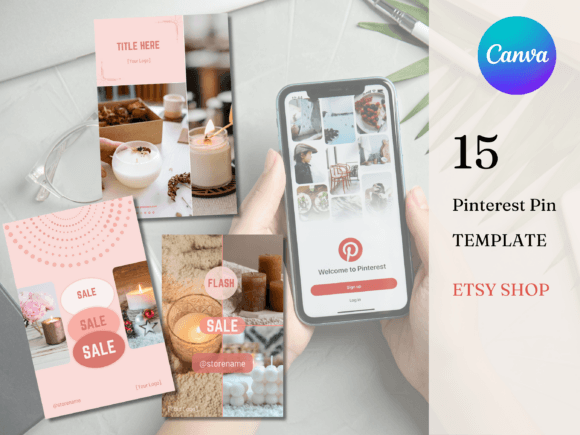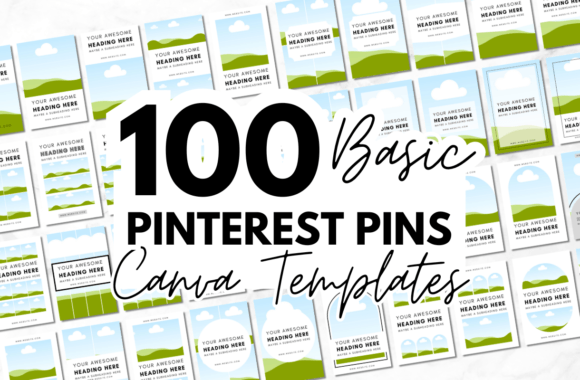
100 Basic Pinterest Pin Canva Templates
In the fast-paced world of Pinterest, where millions of pins compete for attention every single day, standing out isn't just nice—it's necessary. You've got the ideas, the content, the expertise. But turning that into visually compelling pins? That's where many creators hit a wall. Enter the 100 Basic Pinterest Pin Canva Templates, a collection designed to bridge the gap between your brilliant content and professional-grade visual presentation without demanding a design degree.
Why "Basic" Is Your Best Strategy
There's a reason these templates lean into simplicity. Overly complex designs often get lost in the Pinterest feed, while clean, well-structured layouts command attention. Think of these as your design assets foundation—versatile starting points that adapt to virtually any niche. Whether you're a travel blogger showcasing a sunset in Santorini, a food creator photographing homemade sourdough, or a small business owner promoting a new product line, basic templates give you breathing room. They don't fight your content; they frame it.
Each template within this collection embraces modern typography principles. You'll find a thoughtful mix of sans serif font and serif font options that create clean visual hierarchy. Some layouts feature bold, attention-grabbing headlines paired with understated body text. Others use elegant font pairing to guide the viewer's eye naturally from headline to call to action. This isn't random—it's intentional design strategy baked into every single template.
What Makes These Templates Work
The real value of the 100 Basic Pinterest Pin Canva Templates lies in their adaptability. Inside Canva, you're not locked into rigid designs. Swap a display font for something more playful. Replace placeholder images with your own photography. Adjust color palettes to match your existing brand identity. The templates handle the structural heavy lifting—alignment, spacing, proportions—while you bring the personality.
Here's what I've observed working with similar social media graphics tools: the templates that get used most aren't the flashiest. They're the ones that feel approachable. A pin template with generous white space and a clear text overlay consistently outperforms a cluttered design packed with competing elements. These basics understand that principle deeply.
Practical Applications Across Industries
Let's talk specifics. If you run an Etsy shop selling handmade ceramics, a template featuring a large image area with a minimal text overlay lets your product photography shine. Bloggers in the wellness space might gravitate toward templates with softer color blocks and a handwritten font accent for warmth. Content creators managing multiple clients—as Pinterest managers often do—benefit enormously from having 100 starting points rather than building from scratch each time.
The collection also works surprisingly well beyond Pinterest itself. Repurpose designs for web design blog headers, editorial design elements in digital magazines, or even packaging design mockup presentations. A well-structured pin layout often translates beautifully to Instagram carousels, email newsletter graphics, or website banner sections. That kind of cross-platform versatility turns a single purchase into a genuine workflow accelerator.
Working With Fonts Inside Your Templates
Typography choices inside these templates aren't arbitrary. You'll notice certain layouts pair a premium font style headline with a neutral body typeface. This creates contrast without chaos. When customizing, resist the urge to introduce five different typefaces. Stick with two, maybe three at most. If a template uses a script font for emphasis, keep it limited to one or two words—your headline or a key phrase. Let a creative font do its job without overwhelming the composition.
Readability remains paramount on Pinterest. Pins appear small on mobile feeds, often thumbnail-sized. Templates in this collection account for that reality with generous font sizes and high-contrast text treatments. When you customize, zoom out to about 50% on your screen. If you can still read the headline clearly, you're in good shape. If not, bump up the size or simplify the wording.
Building Consistency Without Monotony
One hundred templates might sound like overkill, but here's the practical reality: rotating through a curated set prevents your Pinterest boards from looking repetitive while maintaining brand identity consistency. Pick eight to ten templates that align with your aesthetic. Use those as your core rotation. The variety keeps your audience engaged, while the consistent structural elements—similar margins, recurring color accents, familiar type treatments—build recognition over time.
This approach mirrors what professional logo design and branding studios recommend. Consistency doesn't mean identical. It means cohesive. Your travel pins should feel like they belong to the same family as your recipe pins, even when the content differs dramatically. Templates make that kind of disciplined consistency achievable without a dedicated design team.
Getting Started and Getting Results
Open the included PDF, click the Canva link, and the entire collection loads directly into your account. From there, duplicate whichever template catches your eye and start editing. Replace placeholder text with your own copy. Upload your brand colors as a custom palette. Save your favorite combinations as new brand templates for even faster future use.
The honest truth about Pinterest growth: consistent, quality pin output moves the needle more than occasional viral hits. Having 100 Basic Pinterest Pin Canva Templates at your fingertips removes the friction that stops most people from publishing regularly. You're not starting from zero every time you sit down to create. You're starting from professional, tested, strategically designed foundations—and that makes all the difference between a Pinterest presence that stalls and one that genuinely grows.